Riding the Rollercoaster
A Q & A with Paulette Perhach
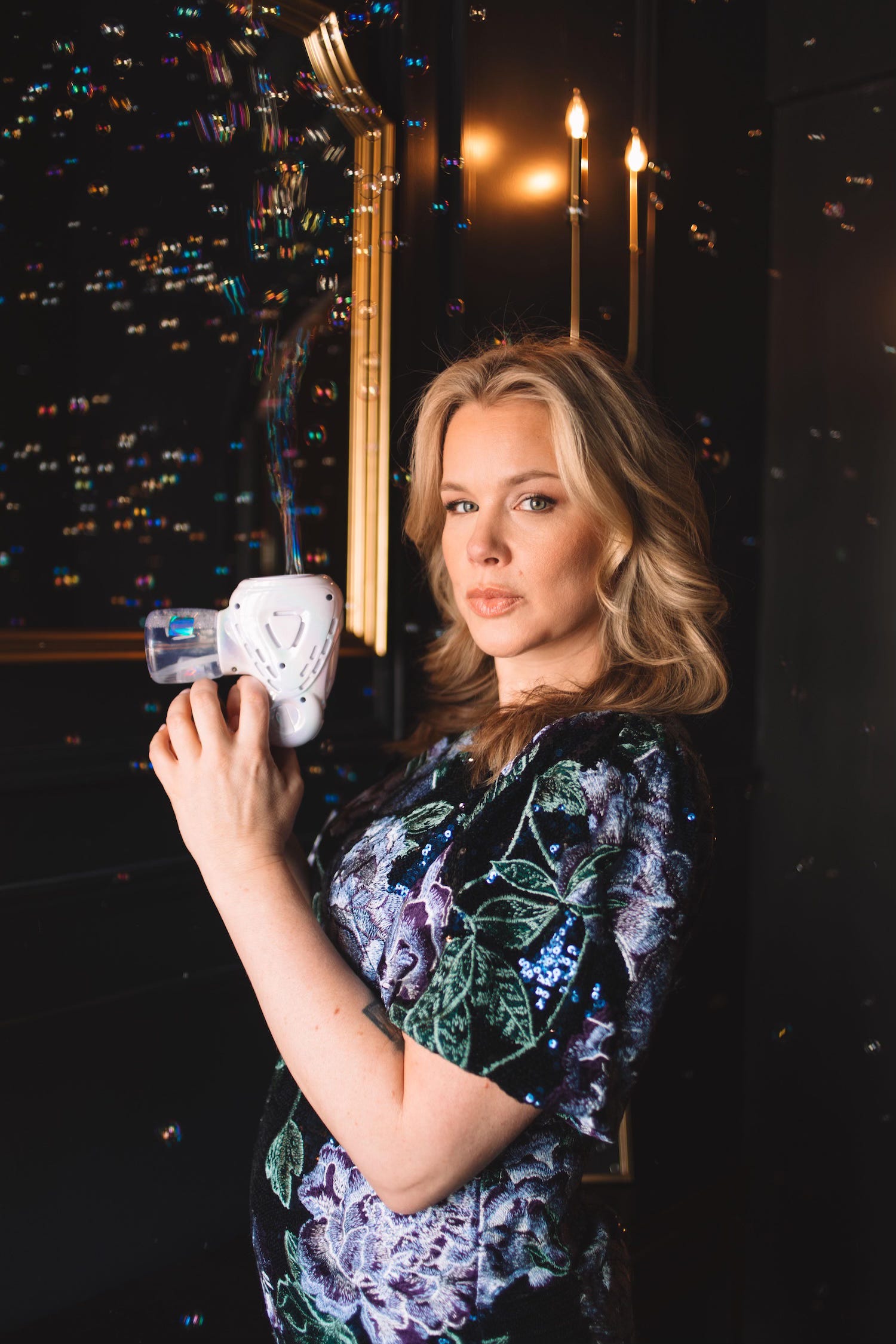
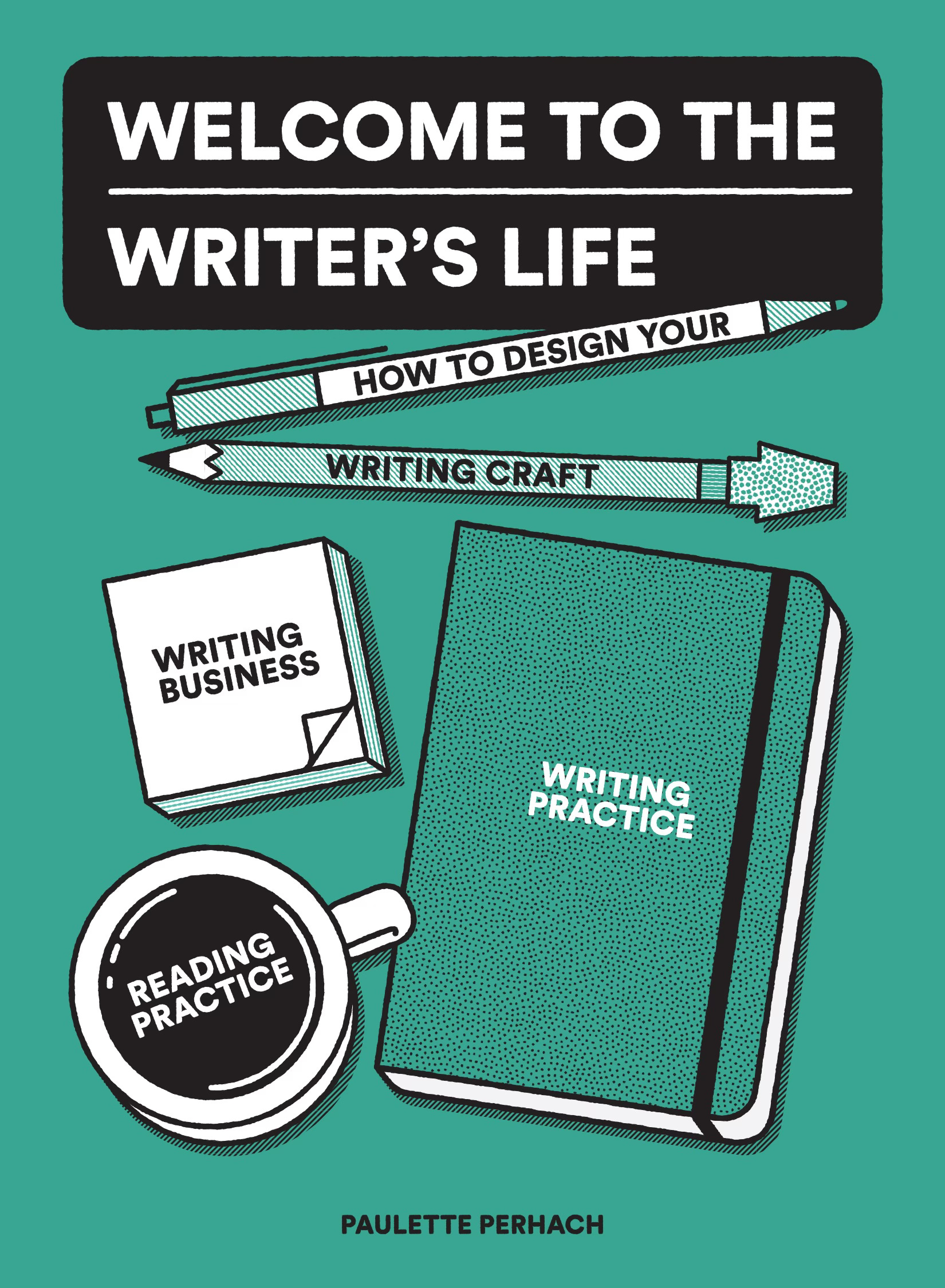
Paulette Perhach is a powerhouse. She’s a writer, a coach, and an entrepreneur. Author of Welcome to the Writer’s Life, she’s garnered dozens of bylines in some of the world’s leading publications, including Cosmopolitan, Slate, Elle, The Washington Post, Glamour, Newsweek, and many more. She’s had more than 20 bylines in the The New York Times, and millions of readers sent two of her essays viral. Stepping out beyond journalism, she’s writing a novel, and on any given day she’s juggling at least three challenging projects.
She’s a big personality—fast-talking, charming, and funny. So funny. Don’t take my word for it. Read the About page on her website.
She’s all that, and she also has ADHD. It’s a certainty that more than a few people have looked at her accomplishments and thought she couldn’t possibly have ADHD. She’s a glorious reminder that high achievement and ADHD are not incompatible and that ADHD can drive wild creativity and innovation—that ADHD isn’t visible.
She makes “all that” seem easy, but she’s quick to acknowledge that ADHD makes it a struggle. She’s been able to do it all because she’s done a deep dive into the research on the neurobiology of ADHD, learned to work with the brain she has rather than try to fit into a neurotypical mold, and has developed systems that help…and might help you as well. But she’s straight up about the hard part and quick to point to the vulnerabilities and difficulties.
I was delighted that Paulette agreed to chat with me about her journey with ADHD, how it’s affected her writing career, and the workarounds she’s developed to protect both her creativity and her wellness. Following is our conversation, somewhat abbreviated because…well…our talk topped out at more than 10,000 words!
Q: Before we talk about ADHD and creativity in your work process, what are you working on now?
A: I’m working on a novel, and personal essays always, and journalism usually. And right now I’ll say my big push is my novel. That's my big rock. Like every day I'm getting that done no matter what-ish, and there hasn't been a ton of time for the other stuff, because I'm building this coaching program and launching software. I'm more of a business person than a writer right now. I love the community we're building, and I'm building my ability to be a writer for the rest of my life. It feels a little bit like when you're investing money, you feel more broke now so you can be richer later. And that's what I'm doing with time right now. [With the novel] I write like 1,000 words a day, and it's almost done. I see the light at the end of the tunnel, and it's been a decade long process.
Q: You have a funny story about how you discovered you have ADHD. Can you share it?
A. I was working on a book, ghost writing a book about distraction, and I was awoken one morning by a call, and this expert said, “I thought we were in an interview today.” I was like, “Oh, my God, yes!” So we started to do the interview, which was about culturally induced attention deficit versus real ADHD. And he and I got to chatting. I could never just keep it one directional on an interview. I always have to make it a conversation. And he said, “You know, it sounds like you have ADHD.” And that was the year I was writing my book, and I got paid…was it $9,000 or $15,000 for a for my book—not very much. And so I made no money, and I was working my ass off that year. He said, “You have a great Center in Seattle, I'll connect you.” But the test was $260. and I didn’t have an extra $260 right then. So I took an online quiz that said, yes, high likelihood of ADHD. But I thought ADHD just meant you are easily distractible. So I left it at hahaha. And three years later I was really still struggling, and I said, okay, I'm gonna really look into this and figure it out. And when I went to go get tested at the center, I realized the center was named after the person I had interviewed. He's this huge ADHD celebrity. In fact, I told that story to the person who was giving me the test, and he got all flustered and kind of star struck and said, What's he like? I was like, Oh my God, you know, when you're coming from a totally different world, you have no idea who you're talking to.
Q: I wasn't planning to ask this, but you just reminded me of something. Decades before I knew I had ADHD, I worked at a university, and a very high up person in the hierarchy invited me to dinner with his wife at their home, which was about an hour away from mine. On the day we were supposed to have dinner, I got a phone call. “Where are you?” I’d totally forgotten. It was too late because I lived so far, and they were so sweet about it and rescheduled, and on that day, I did exactly the same thing. So it was like, looking back, I should have known. But of course, ADHD wasn't on my radar. I still thought of it as little boys bouncing off the walls. Were there any things in your past that, once you knew, you looked back on and went, oh, my God, it should’ve been so obvious?
A: A million different things, but you never think oh well, clearly the fact that I love to buy shit, clearly the fact that I can't stop buying things on eBay and the fact that I bite my nails are connected, or the fact that I'm clumsy and that my friends say I’m too sensitive is connected. You never think this stuff is connected and you learn everything with ADHD is, and you're like, why didn't anyone tell me? And it drives me nuts. I mean, I was in therapy for three years, and she never flagged ADHD, and I cried to her about health insurance and dealing with all the forms, and she was like, “Well, that's something that's hard for everyone.” And yes, but most people aren't crying about it because it feels absolutely debilitating, right? So the question of my childhood and young adulthood was, Why? Why can't I? Why do I? And then ADHD was the answer, and it came almost 40 years into my life.
Q. A whole lot later for me, and yes, all the things you mentioned! My husband calls me Dropsy because I can't get through a meal without dropping a fork or bumping into something.
A. And it's funny—I was thinking about writing about just these two aspects—being an insomniac, having trouble sleeping and being clumsy, which means you're always up and about in the middle of night, waking people up, right? It's annoying, it’s also a delight in a lot of ways, but it’s very annoying to the people around you. It’s really hard. And I think I always recognized there was something different about me, and I was very self-conscious. Plus, I'm five foot nine and a half, just a big person. So in pictures of me with my friend group in high school, it just looked like someone took a closer up picture of me and pasted it on the rest of the group. The double whammy of those was really hard. I always felt like there was a spotlight on me and I was always messing up.
Q. It's so much. I love when people say, “You don't look like you have ADHD.”
A. Like we have horns, right?
Q. So do you see yourself as primarily inattentive or hyperactive or impulsive?
A. Fun funsy dose, the little mixy mix.
Q: There's a phrase so commonly used by people with ADHD—when they get diagnosed they say, “Suddenly, it all makes sense.” There are even a couple books with that title. For me it was certainly like a lightbulb moment. Looking back, I did that life review so many people do, where you look back and go, ah, of course, this was obvious. Was it like that for you?
A. Yes. I taught a class called Harnessing ADHD’s Wild Horsepower—I’m starting it again next Wednesday, actually—and in teaching that class I think it might have been a way to trick myself into learning a bunch about it. So there were definitely two eras. There was: I'm diagnosed and then getting educated. And getting educated was bananas. The brain science of it, and being like, oh, okay, well, that makes sense. I wish I could go back, because four out of five of my family members have it so my house was complete chaos.
Q. Did you know that before?
A. No we had no idea. My dad died when I was 17, and I wish he could have known. I wish he could have felt the same level of self-compassion I feel today, because he had a lot of struggles, you know, and mostly financially, like with being an entrepreneur. And it was so funny, because when I was eight and we were going bankrupt and we lost the house, I said, “Just give me a corporate job.” I'm eight years old and like, just give me a paycheck and a corporate job. And now I'm just like him, and I'm an entrepreneur myself, and I struggle myself, and I'm so glad that I can say, oh, okay, we got the entrepreneur thing going, which is great. And I really kick butt at this, this, and this, but we gotta watch out for this, this, and this, and who's on that? Because I'm not gonna be, you know, and just being able to have the support, to have an admin. And, it’s so funny, people are like, oh, you have an assistant, oh, you're so fancy. That’s like saying to someone with a cane, oh, you're so fancy. Oh, a cane, oh, it's so necessary. Yeah… it's like, no, I can't, sorry, I'm trying to get my fan game on point here. It was very nice to be able to be like, oh, well, I'm never going to X, Y and Z, and to realize that being the person with a ton of ideas is very valuable.
Q. Because I did this, I have to ask, did you start a bunch of businesses where you were like, oh, here's a fun idea. Then you start to do all the work and soon it’s “I'm not going to do that anymore.”
A. Yes. I mean, I'm still trying to be 10 different kinds of writer. I almost made jewelry my career. I used to hyperfocus and obsessively make jewelry. I did know that writer was always the main thrust of what I wanted to do. I mean journalism. I just recently went through all my stuff and found my old press pass from high school, and the back of it said permission to leave. And I was like, oh, that's 1,000% what I was after. I just wanted to be out in the world. I just wanted permission to leave. I didn't want to be stuck there.
Q. I love that. Do you consider this experience as transformative in your life?
A. Getting diagnosed? Oh, yeah, absolutely, my God! It’s so sad to me what it would have been like for the rest of my life to not know it and not be able to just label things as, oh, that's rejection sensitive dysphoria, oh, that’s my impulsivity struggles. Like, over the last year, I lost 10 pounds, and then I gained 10 pounds, and it's like motherf... and like having to just get back up. This is either a story idea or a tattoo idea, but like, Sisyphus, but make it fashion. I'm 42 and this is going to be the rest of my life, right? These struggles are always going to be here, and they're never going away. Whereas, for the early part of my life, I thought, wow, I really struggle with this. Maybe I'll read this book. The number of self-help books I've read is astronomical because I'm, like, something is wrong. Why can't I just be like other people? So the major transformation is just how I got to see myself—instead of this chaos monster who didn't care enough, or was too lazy or wasn't just a good person—as just a human who was being held down and battered around by this chaos monster my whole life, without me even knowing what I was fighting. And now I understand what I'm up against, and I have so much more self -compassion, and life just feels so much better.
Q. Self-compassion seems to be everything with ADHD or life would just so overwhelming. When you said, “Why can't I be like everyone else?” That's the way I’ve looked at writing. Why can't I be a writer like everyone else? Because I just found so many things about it so hard. And I'm wondering—I know you know a lot about all of this now—but before you knew what you know, how did you struggle as a writer, assuming you did struggle as a writer?
A. Feel free to assume that. Not being able to manage all of the deadlines, getting really excited about a lot of ideas and not following through, just all of the creation and none of the curation that needs to happen. It’s the follow through. So you build so much material, but you don't have the bylines to show for it because you're not following up, which is how I started. That’s why 10 years ago I started a spreadsheet for myself, which has now become my software, The Writers Mission Control Center, which is just an extreme overreaction to having ADHD.
Q. I hear a lot of people tell writers in general and writers with ADHD how important it is to have a writing routine, which I don't agree with. How do you feel about that? Do you have a routine?
A. I have a routine-ish. I write everyday-ish. I like to have a little container of when I’ll most likely to write. I have a finish framework. This is so fun. I did this just in the last year. I actually I asked ChatGPT to help me understand what I'm all about and [I told it] I'm all about this. And it did it. And then I ended up having this long conversation, and I realized, oh, I can make this into an acronym. And I'm… this is the rest of my career, because it says everything that I'm all about. So this is how I get work done in a way that is not a routine. So it's an acronym: FINISH. The F is fake stakes. Fake stakes create an answer to the question: what would happen if I didn't write today for me? Right now, it’s that I post my word count on Instagram every day of how much I wrote. It could be a class, an open mic, coach, whatever. I is increment, so understanding what is something I need to do every day or week in order to get to the big goal. And so for me, that's 1,000 words a day to rewrite my novel draft. N is nixing distractions. So that can mean prioritizing: what project am I doing now out of all the projects I have. I let myself have three main projects, no more. It’s also using the Freedom app to block social media. The I is immerse, which is time to really sink into your work. So for me, that's my daily writing group, A Very Important Meeting, but that actually starts on Fridays when I do a meeting with myself called the Writer’s Refresh, where I do everything that's important but not urgent, like going through my emails, clearing the path so I really know I can immerse in my writing, and I’m not going to be in trouble if I do that. This is the point. The S is share, so having community around it, which builds your identity and has that positive peer pressure and people to help you up when you fall. And then H is hype, which includes really positive self-talk, growth mindset, and then also self-care. The other day I woke up and I was so anxious. So for me, a fun side of ADHD is really bad anxiety. I woke up terribly anxious. My calendar says novel, but my body says it's jog time, because I need some endorphins going through my body. So just really making sure that you're taking care of your self-regulation—that's how I get stuff done. And it's not I'm gonna do it, you know, 6am every day, but that system has helped me keep going.
Q. So when you said, ish … I find sometimes I’m super productive one day, and the next day, I wake up and I know it's not gonna be one of those days.
A. There’s this woman, Codie Sanchez—one of her big phrases is fuck your feelings, follow the plan. So I check in with fuck your feelings, follow the plan. Can I do that? You know, it's kind of like having a craving for something sweet. And today where all I'm thinking about is a croissant, and I'm gonna get a croissant, I'm not even gonna fight it. Or is it like, I think could eat a croissant, but do I need a croissant. Okay? I'm gonna not need a croissant, right? But could I sit down and try to write something. Or is it like I can't even do anything. Is it checking in and doing the best you can with the mind you have today? Yeah, yeah, that's it.
Q. I'm so much more fuck the plan and follow my feelings! I know we talked about having too many ideas. That's one of the things I struggle with—there are so many, and then nothing happens. And I love the way you described that as “instead of momentum, you have a pile of starts and a vague sense of failure.” That’s just so perfectly descriptive and rings true. As a journalist, you can come up with lots of strong ideas, and struggle to decide which to tackle. Can you talk about the vault—organizing ideas in your Mission Control Center?
A. I think having your stories in one place so that you can say, okay, I know it's here and I can consider it. And I want to be able in the Writers Mission Control Center to tag which are favorites in the future. I also allow people to tag a theme so that if you get an opportunity in the future, you say, okay, these are one of my travel stories I don't want to forget. You know, is it something that is going to expire or not? And if it's not, then, then you can do it at any time. And just saying, do I have to do a story right now? There's probably three or four stories I've had in my life that are expired. I have more than 300 in my Mission Control Center. They’re good forever. And so I think just knowing, is this a story that is going to help people? Is this a story that is special? Is it timely, or is it something that can wait or maybe not my most important story? And sometimes you're waiting for the end of a story to happen or you realize that something you thought was its own standalone story is actually the beginning of another story. So sometimes they have to marinate for a little bit.
Q. Does ADHD make deadlines tough for you, or do deadlines actually makes things happen?
A. Deadlines are what makes things happen for sure, but I think I had to learn that I need to schedule the time to work on it. I can't just have the deadline on my calendar like a zombie coming at me, like somehow very slowly, but also inescapable. Yeah. That was a big lesson for me.
Q. I try to avoid using the “ADHD is a superpower” expression, but do you think that ADHD gives you an edge creatively? And if so, how?
A. Yes, I think it really helps with ideation and creative thinking and making connections where someone else might not see a connection. So, like, I'm very quick with jokes, which can be a problem, because sometimes you need it to go through the “is this appropriate filter.” You know, sorry, time constraints. I have to get this joke out in .1 seconds or it's not funny anymore. So the comedic timing does not take into account the red tape of social acceptability, and that has caused some problems. But yeah, we're funnier, we're fast, we're creative. Novel solutions are really big. So there are some really wonderful upsides to it, but the downsides deserve the respect—it's almost like respecting the ocean. Like this is a powerful force. And if you look at life expectancy, of the likelihood that you're going to be financially destitute, of addiction [with ADHD]—you need to know what you're up against. You cannot just brush it off the way I did for three, four years, before I really got tested and got educated.
Q. What other aspects of writing in particular does ADHD complicate? How does it make being a writer hard?
A. For me, a lot of it is if the rest of my life is in chaos, I have a hard time writing. So if I wake up and my bank accounts are negative, the novel is less likely to get done. Abandoning projects once the dopamine has worn off is hard. Falling into the into the shame cycle of rejection is hard. And I think there can be something that's difficult about vulnerability when you have ADHD, because there's so much of your life that you're tempted to hide. And I think when people say there's a lot about me that surprises them, I've become that way externally because the opposite was so true about me. Like I can seem brave because I hate how much of a wuss I am, you know, and I can seem very vulnerable because I hate how much of a perfectionist and, you know, how loosey goosey my sense of self is—that it's very affected by the mirror that other people show me. I have a first line of a memoir I’ve been hanging around with for a while: it’s important to have a solid sense of self, which is what makes it so hard to live without one
Q. You've talked vulnerably in public, so maybe you've developed a comfort level with that. But it seems with everything with ADHD, there's the flip side, like, over sharing versus keeping stuff to yourself. And it’s one day you can do or be one thing and the next day another.
A. I know I'm a definite over-sharer, that’s another thing. God, there are so many things. I remember when I sent my best friend an Instagram reel—something about ADHD and your first tactile addiction, and it was playing with candle wax. I played with fire and candle wax so much when I was a child that my best friend's dad threatened to take us to volunteer in the burn unit if he caught us playing with it. And I was terrified of having to go volunteer in the burn unit, and yet I could not stop like that. I cannot stop. And you just kind of detach from your body. It's like you're watching yourself do something, but you cannot latch in and stop yourself. If someone doesn't have that, and they're like, “I don't know what you're talking about,” I get it, but that's what it feels like.
Q. How important is community with others with ADHD?
A. Last year when I ran a class and we all logged on, I just immediately realized, oh whoa, this is the first time I've ever been in a room where everyone has ADHD and nobody does not have ADHD and what a load off! Oh, how exciting. No explaining today. So I think it's essential, because others are not going to understand ever, you know. They can be sympathetic but they can’t be empathetic. So you can feel like it’s a place to belong after a lifetime of feeling like you don't.
Q. In addition to the vault, do you have any other techniques that are helpful?
A. Definitely not expecting myself to gain skills, and just outsourcing those. So that has meant I haven't had as much personal income, because so much of it goes to help, but I am very much doubling down on what I'm good at. I think that's the thing. What you're good at—the superpowers that ADHD has bestowed upon you—have got to become the things you do, and anything else … like, I don't plan to cook. I happen to like cooking, but a lot of people with ADHD don't. And so if you're like one day I'll learn to like to cook. And so you keep buying ingredients, they go bad in your fridge, and then you keep ordering DoorDash. Buying pre-prepared meals can feel too expensive, but you’re just not ever gonna become that person who likes to cook or feels they can handle it. For me, that means like I have an accountant helping me look over my finances. I really should have a personal finance person. I would like to have a health coach as soon as I can afford that. Those things make it easier for you to do, or free to do, what you do well. And what I'm really, really good at is writing and coaching writers and designing a software to help writers. And that's pretty much what I need to be doing. And then it's like, can we all take care of the human form that is on the struggle bus non stop—that’s a big struggle bus!
Q. Is there anything you’ve tried that hasn't helped?
A. So many things. Like no other system is going to help you until you understand ADHD. What's the right metaphor? It's like the glass ceiling where you keep banging your head against it. I forget where I even heard this—I'm stealing this from someone else who talked about how there was a fly hitting against a window, back and forth, back and forth, back and forth. Ten feet away there was a wide open door and the fly was gonna die just hitting the window over and over and it didn't know. All I had to do was back up, go over, and come through the door. You can try stuff and you can learn maybe this will work with my ADHD. But if it doesn't, I think expecting yourself to have one system and one plan that works forever…our systems work for a while and then tend to fall away. My next hire at my business is going to be a project manager, because I have all these ideas, and then I’m like, who's gonna do the follow through and make sure it still happens? It's like the chore chart that my family would make. And then we would find the chore chart two weeks later, you know, half under the fridge, and we're like, oh yeah, I remember we were gonna do that. So what hasn't worked for me is expecting any other system to wholesale work or solve my ADHD and not having systems that let me do the check in with ADHD first and not expect myself to suddenly be someone who doesn't have ADHD and hence can follow this plan.
A. So when you begin working with people as a coach for ADHD, do you find that many of the clients are just trying to turn themselves into a neurotypical person and to do things—
Q. They're doing the fly thing at the beginning, yeah, for sure, for sure. It’s kind of like buying workout equipment. During COVID I hired a personal trainer online because I need a person—I need body doubling. The equipment is not going to help you. It's like emotions around it. It's that little bit of pressure, that social element of it. And so you need a buddy to do the classes with, something like that that gets you moving.
Q. You’ve said your career might have been different had you not had ADHD. Do you experience, or have you in the past, experienced feelings of grief or regret over that? Or is that something you're easily able to let go of?
A. Oh god, yeah. Like, who I would have been if I had known or not had an ADHD. Exactly. Yeah, both, really, but, you know, I think they're kind of linked. I mean, it's almost something that I'm like scared to think about deeply, because I think there's probably more grief than I even want to acknowledge, and I'm trying just to move on and enjoy life. At least now I know it's not my own … I know it's not a choice, you know, and it's led in some really cool directions. And I'm so glad that I'm diagnosed now. One person in a call was diagnosed at 74 ,and that’s so frustrating, you know? It's almost heartbreaking. Yeah, heartbreaking.
Q. You have on your website one of the best “About” pages I've ever seen. I love it. It's so funny. One the one of the parts I like most is where you say your writing has been rejected from some of the nation's finest publications. So it makes me want to talk about rejection. All writers face rejection, and most on a pretty regular basis. And I know it's not fun for anybody, but for those of us with RSD [rejection sensitive dysphoria, a hallmark of ADHD] it’s agonizing. If that's been your experience, have you found anything that helps? What helps you keep putting yourself out there?
A. I think that's where community really comes in, and hearing other people being rejected, and hearing so many stories about people who are rejected over and over and over. Even one of Pam Houston's professors told her she needed to find something else to do with her hands. I don't know… it did feel good to post all my rejections on Instagram. That's like the exposure therapy kind of thing happening. So just getting in community. And really, I think the being in the joy of the moment and being like, had so much fun writing this, and I just love it… like there's the very thing that’s is open to everyone, and no one can gate-keep it from you, and that's a beautiful thing to remember. And I have loved being published in places that feel exciting, but my favorite, favorite thing is sitting at my desk and typing something and making myself laugh at my desk. And you can do that no matter what, you know? Or finding a book that makes you feel like “I want to leave this party so I can just go read my book,” right? Like a book you're having a love affair with, a torrid love affair, no one can take that away from you. So those things are unrejectable.
Q. Are there any self-care practices that you find helpful?
A. Obviously, humor and meditation. I run a meditation and writing group called A Very Important Meeting every day. And watching the crap you put in your mind. It's really big, the people you're around, the people you let in your life…. Emma Pattee used this phrase in her book that I just loved: an “indignity to miracles everywhere.” So I am very intentional about clinging on to the miracle and saying we life is a complete mystery. I'm part of that mystery. I came out of the stars. It sounds very woo to say, but you're like, Well, what is the truth? Did you come out of the stars? It's like, yeah, I guess I do have to say that. And try to stay on that level as much as possible. And I get pulled to the level of, you know, ooh, the new Starbucks drink is out, and I want to get into this writing retreat., and, you know, God, how many Instagram followers do I have? Right? You know, do I feel okay about that? Like we're all social creatures, and we're all confronted more with the surface of life every day. And so you have to be really intentional about going deep, because, you know, the surface calls at all times, especially with social media and just so much going on. So I’m saying nature, reality, and creativity!
Q Is there anything that I haven't asked you about ADHD as it relates to creativity that you would like to comment about?
A. I talked with one professor who said his students thought if they were organized about their writing it would kill the process or kill the creativity of the actual writing. And I’ve certainly found that to be the opposite, because when I am organized, it calms my nervous system and allows the free flow of writing. I actually got an idea in the shower today, and I have these things called Aqua Notes in the shower. So if I get an idea I can put it on there.
Today I was like, Don't forget. Don't forget. Don't forget. So if part of your mind is saying don't forget, or I have to do this, or I'm about to be in trouble if I don't do this, you need a system. I have a system to get that out of my mind so that my mind is free at any given time to really focus and really drop in. Then that is such a beautiful gift to yourself. And that reminds me that’s the spirit I now bring to organization. It's really fun because my business manager, Anita, who's been with me now for five years, she and I have started to say whenever we've set ourselves up nicely, “Oh, look, we were so nice to ourselves here.” If we have a business meeting and need to work off a document and we have a link to the document right in the calendar… “oh, we were so nice to ourselves here.” If we forgot to put that in and we're digging around for it, we say, “okay, we could have been nicer to ourselves and we'll do that next time.”
There’s so much around when you grow up with ADHD, and you grow up broke, and the amount of respect and honor you get from the world is in the garbage can. When I got diagnosed and educated, I started to treat myself with respect and honor in a way that I never had before, and to expect that from the people around me. And bringing that to this, to the essence of being organized or getting it together, is a really nice gift. And I think it's all about how it feels. It's not just the outcome, but how does it feel to get to the outcome? So if you stay up all night, as you might have done doing a science project, and say, “Why do you do this? You are the worst. I hate you. You never, ever do things right? You always mess everything up.” And yeah, you get that science project in the morning. But how has the last 24 hours felt? I could have been nicer to myself. We have five hours left. What can we do here? And then how can we make sure we don't do it next time? So if you just create that stress, that's like the worst, and that was the way that I talked to myself through a lot of my youth.
A. Yeah, that's great. I love that because I found a great ADHD therapist after a lot of trying, and I never realized how negatively… how much negative self-talk I used. I really didn't. I thought I spoke well of myself until she started pointing it out, one thing after next. She’d said, “Do you hear yourself?” And it made a huge impression on me. She said, “You wouldn't talk to a friend that way.” No, I wouldn't, and now I have her voice in my ear telling me the same thing you’ve said, you know, to be a little kinder to myself.
A. Yeah, that actually makes me kind of tear up, because that's what I hear from my clients, and that's like—that's the real work. It's so great.
Q. That’s also a gift that you give to your clients. If you could recommend just one thing—a book, a podcast, a Substack—what would it be.
A. I love Tracy Otsuka’s ADHD for Smart Ass Women. She's so great.
Q. If you have a dopamine menu, what’s on it? What are a couple things that give you joy or excitement?
A. My label maker. I love playlists. I'm obsessed. have one called belting. And one of the best times I've had, literally, like, over the past year, was I was driving to the airport five in the morning, so it was dark, and I was gonna listen to a self-help book, but I was like, no, it's too early. I put on my belting playlist. No one could see me because it was dark and I was just singing my heart out for two hours at an airport. Best time I've had in a long time. So singing karaoke. Silly oven mitts. Like, silly, everything—everything that can be silly. Silly underwear. Go for it. Gifts that are cringy. Out of my cold, dead hands, emojis. I love emojis. I'm so grateful to live in the era of emojis. GPS. Have you used it? The best? Ooh, gel manicures are the one thing that stopped me from biting my nails. Convertibles. And cute little dogs like the one I'm pet sitting who's hanging out back here.
Q. Okay, so the weird last question… if you could give up the ADHD, would you?
A. Oh, what a question. Oh, no, God, that's such a hard question. Could I give it up? Yeah, it's so funny to try to suss out what you would lose, but would I still be funny? Yeah? Would you be yourself? Would we be who we are? I don't even… I don't think I would be myself. I don't know. That's a question that makes me feel very weird. I don't like it. Oh, God, I don't know, yeah. I mean, I think Dr. Sasha Hamdani would be like, “I would choose to not have ADHD.” I could choose to not if I could still be funny, maybe, but I feel like it might be part of my funny. The things we hold on to!
Q. Okay, this is a better question. Let's tell readers where to find you and how you can help them.
A. My class Harnessing ADHD’s Wild Horsepower starts Wednesday, July 23. I have a daily writing group called A Very Important Meeting they can just join on my website. And then my software is called The Writer's Mission Control Center, and that’s where people can just organize their writing life. And the cool thing is, we have a users’ meeting every other Friday, so if people have any questions, they can just come in and ask what's going on. Our third version is coming out. It's really getting cool, so I'm very excited about that.
Q. Is there anything you'd want people do know they couldn’t find in your bio?
A. Oh God, for my ADHD people? I think the whole thing about my About page is like that I struggle as much as I thrive. It's a battle of wills. I always say, people compliment me for all my systems, and I say they’re like the fence in Jurassic Park. You’re not like, oh, is there a pony back there? It's like, no, this thing I'm keeping in place is a monster, okay? You better hope the power stays on, or we are all in trouble. So that is, I hope, my gift to the writing world and other writers is want you to see, in general, how ugly it is, but it’s also is pretty, you know, and it's ups and downs and that’s why we love it. So we're just addicted to the rollercoaster. But the roller coaster definitely dips down and I’m left screaming.
Q. Well, your about page is so much more fun to read. You know, how many about pages have you read where you just yawn through them?
A. Well, that was the whole thing about my book, Welcome to the Writer's Life. It was like living in a place my whole life where I didn't know writers. It was like, there was Barnes and Noble, right? And there was the painting of the big, important writers on the wall. And then I got to live in a place where there were writers, and I met them, and I'm like, first of all, you're not as hot as your author's photo and you're not as cool, calm, and collected as your author's bio makes you look. So let's all be a little more honest about who we are. So that's why I wanted to be like: also, guess what else was happening while the rest of this shit was going on?
Q. Yes, because we writers can be pretty precious.
A. Preciousness. Someone's got to keep it real.
Learn more about Paulette at her website, find her on Instagram, and subscribe to her Substack.